Animal Needs Assessment Tool Helps Tailor Community Support Services
Families seeking help often have more than one challenge affecting their pets.
While one visible concern—such as a lack of veterinary care—may bring them to your organization, additional needs like inadequate enrichment, unsafe housing conditions or financial hardship often go unidentified. This research shows how using a simple Animal Needs Assessment can help community outreach staff consistently identify those needs, prioritize services and improve outcomes for pets and people.
The ASPCA's Community Engagement team in New York City helps pet owners facing financial, logistical or personal challenges access essential services (such as veterinary care, pet supplies, grooming and education) so pets can remain safely in their homes whenever possible. The team also partners with agencies such as the NYPD, human service providers, domestic violence service organizations and community groups to connect families with broader support, including safety planning, cruelty response, outreach events and free vaccine clinics that benefit both pets and people.
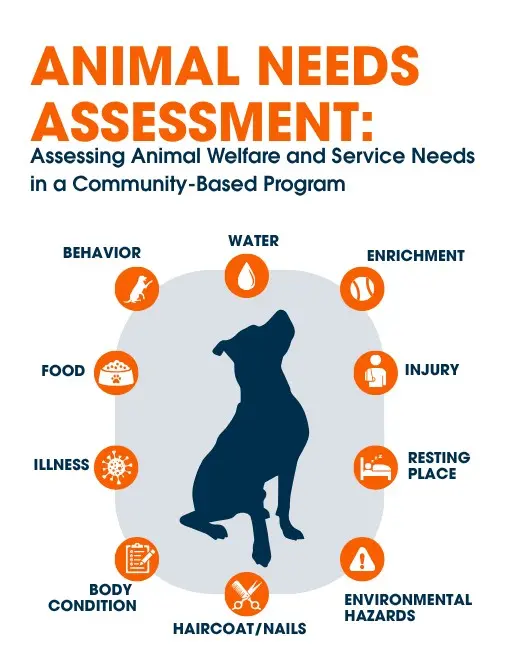
To support this work, the team developed and uses a 10-item Animal Needs Assessment to systematically identify and prioritize common animal welfare concerns, including inadequate enrichment, insufficient resting places, environmental hazards and unmet veterinary or population control needs. Researchers analyzed Animal Needs Assessments completed across 519 households, revealing several important findings:
- Most households needed multiple services to address their pets' needs.
- Client openness during the first interaction was strongly associated with successful service delivery.
- Animal welfare concerns frequently intersected with human vulnerabilities, highlighting the value of collaboration between animal welfare organizations and human service providers.
Key Study Takeaways
- A structured Animal Needs Assessment helps community outreach staff consistently identify and prioritize animal welfare concerns.
- Many households have multiple overlapping needs, making comprehensive assessments more effective than addressing only the presenting concern.
- Animal and human needs are often interconnected, reinforcing the importance of coordinated support across animal welfare and social service organizations.
- Building trust during the first interaction improves client engagement and increases the likelihood that services will be accepted.
Why This Research Matters for Animal Shelters
- A standardized Animal Needs Assessment helps staff identify concerns that might otherwise be overlooked and creates a more consistent approach across teams.
- Assessment data can reveal community trends, inform program planning, strengthen grant applications and guide resource allocation.
- Structured assessments help shelters prioritize services based on each family's most urgent needs rather than assumptions.
- Animal Needs Assessments are most effective when paired with relationship-centered communication, trauma-informed approaches and strong partnerships with human service organizations.
Putting an Animal Needs Assessment & Research Insights into Practice
- Build trust from the first conversation. The assessment is only as effective as the conversation surrounding it. Approach clients with empathy, clear communication and a nonjudgmental mindset. Research suggests that client openness during the initial interaction is one of the strongest predictors of successful service delivery.
- Use the assessment consistently. Incorporate an Animal Needs Assessment (or similar checklist) into every home visit or community interaction. Using the same tool each time helps staff consistently identify concerns, prioritize services and collect meaningful data over time.
- Look beyond the presenting concern. If a client requests pet food assistance, use the assessment to also evaluate veterinary care, enrichment, housing safety, resting areas, spay/neuter, behavior and other potential needs. The research suggests these concerns frequently overlap.
- Prioritize needs based on assessment findings. Use assessment results to distinguish urgent welfare concerns from needs that can be addressed through education, referrals or follow-up visits, helping staff make more consistent decisions.
- Document and review assessment data. Consistently recording assessment findings helps identify recurring community needs, evaluate programs and guide future outreach efforts and resource planning.
- Support the assessment with strong partnerships. Develop relationships with human service organizations before you need them. Knowing available resources and referral pathways enables staff to connect families with the right support more efficiently when overlapping human and animal needs are identified.
Resources & Downloads
- Animal Needs Assessment [PDF]
- Animal Needs Assessment template [Canva - editable]