
Top 10 Pet Toxins of 2025
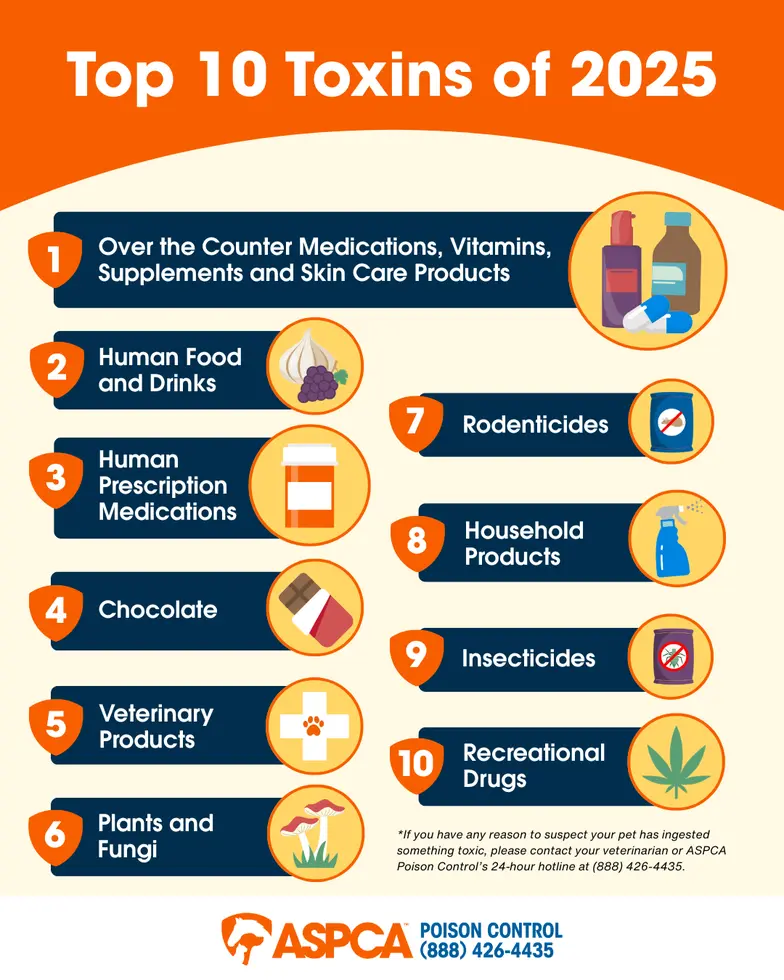
Each year, ASPCA Poison Control (APC) compiles its data to examine what types of toxins pets are encountering. In 2025, APC received calls about pets being exposed to more than 376,000 substances.
- Over-the-counter (OTC) items remains at number 1 and has increased its lead with 16.9% of the exposures. A significant part of this increase is the popularity of new skin care products (masks and creams) promoted on social media. Vitamins, dietary supplements and pain medications still make up most of these exposures.
- Food and drink remains at number 2 with 16.4% of the calls. Grapes/raisins, xylitol chewing gums and onions/garlic make up the largest part of this group.
- Human prescription medications remain in the number 3 spot. Cardiac medications, antidepressants and ADHD medications are the most commonly involved.
- Chocolate makes up 13.6% of the exposures and comes in at number 4. Dogs are the most common culprits when it comes to chocolate exposures. Cats may sample the chocolate, but don’t eat huge amounts like dogs do.
- Veterinary products are at number 5 this year with 9.1% of the exposures. Many of these are ingestions of over-the-counter flavored chewable tablets or soft chews (joint care, calming chews, etc.). These forms make it easy to administer but really increase the risk of ingestion of the whole container.
- Plants and fungi remained at number 6, with 7.5% of the exposures. The number of overall plant exposures continues to drop.
- Rodenticides are again number 7 with 6.5% of the exposures. Safe placement of rodent bait is important in households with pets.
- Household products remained at number 8 with 6.4% of the exposures. Cleaners and paints make up a large amount of these exposures.
- Insecticides are at number 9 with 3.8% of the exposures. Reading labels about correct dilution and putting bags and containers away after use can reduce the risks from this category.
- Recreational drugs round out the top 10 with 1.9% of the exposures. In 2025, APC saw a 400% increase in Kratom exposures.
If you have any reason to suspect your pet has ingested something toxic, please contact your veterinarian or the ASPCA Poison Control’s 24-hour hotline at (888)426-4435.
Downloads
Download AllWe have lots more on this subject:
Topics:
Toxicology & Poison Control
Type:
Examples from the Field