
Outpatient Treatment for Canine Parvovirus in a Low-Cost Community Veterinary Clinic
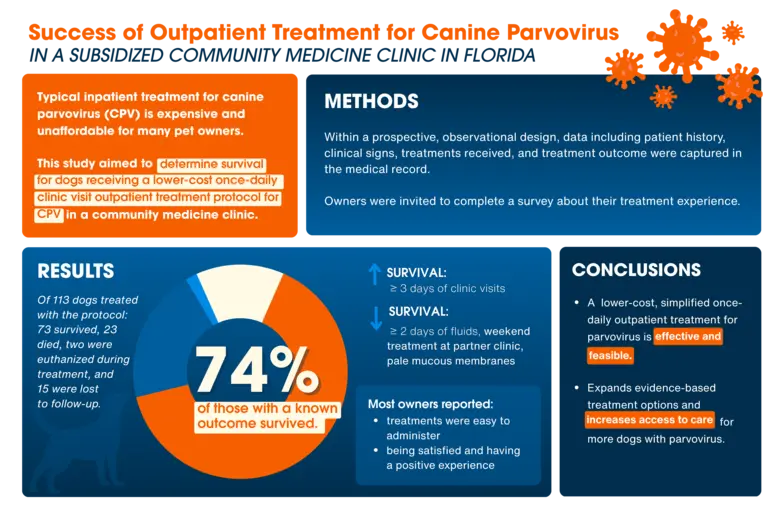
Canine parvovirus (CPV) is a highly contagious and deadly virus that is common in puppies and unvaccinated dogs. Traditional inpatient treatment is effective in most cases, but also very expensive and unaffordable for many pet owners. This study, conducted at a subsidized community veterinary clinic in an underserved community in Florida, evaluated the success of a lower-cost, simplified outpatient protocol involving a once-daily office visit for treatments at the clinic and at-home evening treatment and monitoring by the owner. The goal was to determine the survival rate for the treatment, identify potential predictors of outcome and assess owners’ perceptions of treatment feasibility and satisfaction.
Key Study Takeaways
- Of 113 dogs treated with the protocol, 74% (73/98) of those with known outcomes survived, a rate comparable to that reported for more intensive inpatient and outpatient protocols (Venn et al., 2017; Sarpong et al., 2017; Perley et al, 2020).
- Predictors of decreased survival included pale gums at first visit, needing and receiving two or more days of fluids under the skin, and being referred for and receiving weekend care at a partner clinic. Increased survival was associated with three or more clinic visits.
- Most owners who completed a short, voluntary survey at the end of treatment reported high satisfaction, found treatments easy to administer and felt respected and supported by the veterinary team.
Implications for Clinics and Shelters
- Offering outpatient treatment as a part of a spectrum of care approach, when appropriate, increases treatment access for more dogs with parvovirus, reducing unnecessary suffering, death and euthanasia in affected dogs while keeping pets and families together.
- This study supports a lower-cost, once-daily outpatient treatment for parvovirus as a viable option for clinics and shelters with limited resources or clients facing financial or other barriers to accessing typical 24-hour, specialized care.
- Findings build upon existing research to illustrate a range of evidence-based options for parvovirus treatment with good outcomes that can be tailored to the needs and preferences of the patient, client, clinic, and community. While cost of care may be a primary driver in choosing outpatient care, owners may wish to treat their pet at home anticipating the pet having a poor response to hospitalization. Previous outpatient protocols offered twice daily visits to the clinic which may be difficult for owners to integrate into their usual schedule of work and other responsibilities.
- Clinics and shelters should consider the patient’s status, their resources to deliver the protocol, as well as potential client barriers (e.g., transportation challenges, ability and willingness to administer fluids at home) when determining if this protocol is the right fit for their setting and their patients.
Additional Resources
References
- Perley K, Burns CC, Maguire C, and others. Retrospective evaluation of outpatient canine parvovirus treatment in a shelter-based low-cost urban clinic. Journal of Veterinary Emergency and Critical Care. 2020; 30(2): 202-208. doi:10.1111/vec.12941.
- Venn EC, Preisner K, Boscan PL, Twedt DC, Sullivan LA. Evaluation of an outpatient protocol in the treatment of canine parvoviral enteritis. Journal of Veterinary Emergency and Critical Care. 2017; 27(1): 52-65. doi:10.1111/vec.12561.
- Sarpong KJ, Lukowski JM, Knapp CG. Evaluation of mortality rate and predictors of outcome in dogs receiving outpatient treatment for parvoviral enteritis. Journal of the American Veterinary Medical Association. 2017; 251(9): 1035-1041. doi:10.2460/javma.251.9.1035.